

Energy Monitoring
Energy supply and management go beyond purchasing new equipment or installing a solar power plant. In many buildings, factories, and commercial facilities, a significant portion of electricity is wasted due to insufficient consumption data, inefficient equipment operation, unplanned energy use, or suboptimal settings.
AGER International Industrial Group provides energy monitoring, analysis, and optimization services to help organizations understand their actual consumption patterns, identify sources of energy loss, and make more informed technical and management decisions based on measurable data.
This solution involves collecting and analyzing electricity consumption data, solar power generation, inverter status, battery performance, and the operating behavior of key equipment. The result is a clear picture of the facility’s energy performance and a defined path toward greater energy efficiency.
Why Is Energy Monitoring Important?
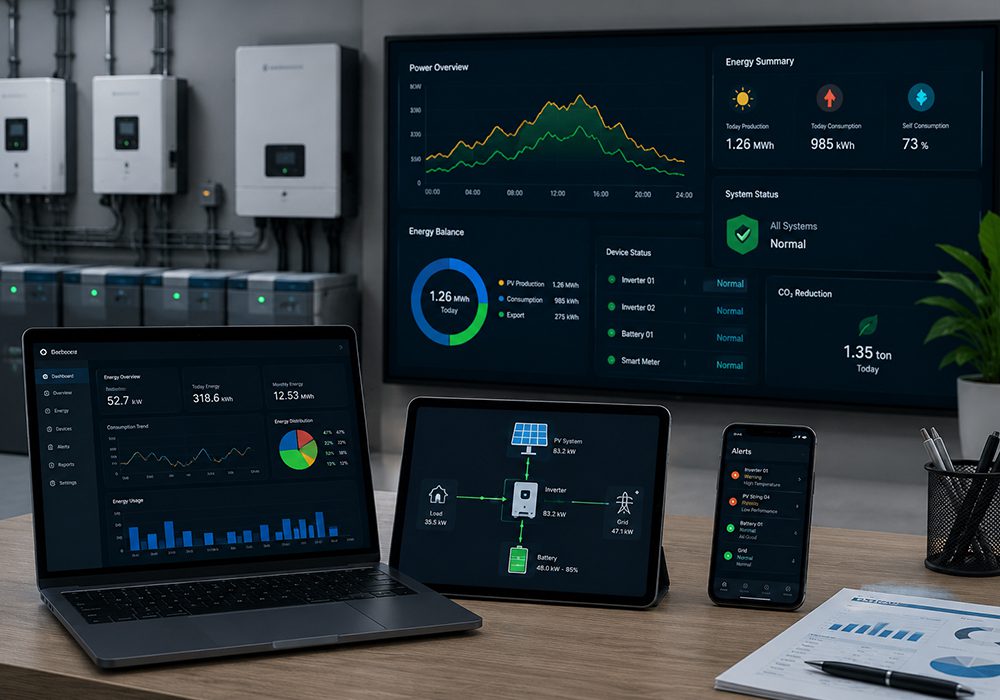
Effective energy management begins with accurate measurement. Electricity bills show total consumption but do not reveal which areas, equipment, or time periods contribute most to energy costs. An energy monitoring system collects data from electrical panels, meters, inverters, batteries, and other key equipment. This information is presented to managers through clear charts, reports, and actionable alerts. By analyzing this data, organizations can identify peak consumption periods, detect equipment using more energy than expected, assess whether solar power generation aligns with the plant’s designed capacity, and determine which optimization measures will have the greatest impact.
Beyond Electricity Consumption Monitoring
Energy monitoring goes beyond displaying numbers and charts. Its true value lies in analyzing data and turning insights into actionable decisions. For example, a compressor may remain running outside working hours, an HVAC system may operate with inefficient settings, or a production line may continue drawing significant power while idle. These issues are not apparent from electricity bills but can be identified through equipment-level monitoring. Similarly, a solar power plant may experience reduced output without a complete system shutdown. A faulty string, soiled panels, or declining inverter performance can lower energy production without obvious signs of a problem. Continuous monitoring helps detect these changes earlier, enabling timely corrective action.
AGER Energy Monitoring & Optimization Services
Energy Consumption Measurement & Breakdown
Electricity consumption can be measured separately for production lines, halls, floors, electrical panels, or key equipment. This breakdown reveals each area's share of total energy consumption and costs.
Analysis & Optimization Recommendations
Once the data has been collected, energy consumption patterns are analyzed, and optimization opportunities are prioritized based on potential savings, implementation costs, and operational requirements.
Energy Monitoring in Factories and Industrial Facilities
In industrial facilities, electricity consumption is distributed across production lines, electric motors, compressors, pumps, cooling systems, and auxiliary equipment. Without equipment-level measurement, it is difficult to determine which areas consume the most energy or identify equipment operating below optimal efficiency.
Industrial energy monitoring can record real-time production line loads, electricity consumption outside working hours, power factor, current, voltage, and peak demand. Analyzing this data enables facilities to optimize production schedules, reduce unnecessary energy consumption, and prioritize equipment for maintenance or replacement.
This information also provides a reliable basis for designing solar power plants and energy storage systems. Understanding actual consumption patterns allows new equipment to be sized more accurately and cost-effectively.
For grid-connected solar power plants, obtaining preliminary approval or authorization from the regional electricity company or distribution utility, along with conducting grid connection studies, is an essential part of this stage. These studies determine the grid’s available connection capacity, point of connection, voltage level, protection and metering equipment, power transmission route, and technical interconnection requirements.
The outcome of this stage provides a clear overview of the proposed capacity, estimated annual energy generation, preliminary implementation costs, grid connection conditions, and an appropriate project development roadmap. A thorough feasibility study helps prevent unsuitable capacity selection, unforeseen cost increases, permitting difficulties, and constraints during the design and implementation phases.
Energy Monitoring in Commercial and Office Buildings
In shopping malls, hotels, hospitals, office buildings, and residential complexes, a significant portion of energy consumption comes from heating, ventilation, and air conditioning (HVAC), lighting, elevators, pumps, and shared equipment. Energy monitoring enables building managers to track electricity consumption across individual floors and areas, identify equipment left running outside operating hours, and adjust heating and cooling systems to match actual occupancy and operating conditions.
In multi-tenant buildings, consumption can also be measured separately for individual units, allowing managers to compare energy performance across different areas. This improves cost transparency and supports more accurate and efficient energy management.
Solar Power Plant Monitoring
Solar power generation should be continuously evaluated against design specifications, local solar irradiance, and historical performance. An abnormal drop in output may indicate soiled panels, shading, inverter faults, a disconnected string, or malfunctioning protection equipment.
A solar monitoring system records daily and monthly energy generation, inverter status, system faults, and energy delivered to the grid. In larger projects, it also enables performance comparisons across different sections of the plant and more detailed analysis of energy losses. Early detection of performance degradation helps prevent prolonged energy losses and revenue reductions, while ensuring that maintenance and repairs are carried out based on actual operating data.
Powerwall and Energy Storage System Monitoring
In energy storage systems, battery state of charge is only one of several critical parameters. Charging and discharging power, cell temperatures, cycle count, usable capacity, and Battery Management System (BMS) status must also be monitored.
Powerwall monitoring enables battery performance to be evaluated under different operating conditions and helps detect early signs of capacity degradation, rising temperatures, or cell imbalance. This information is essential for optimizing charging and discharging schedules, extending battery lifespan, and managing energy consumption priorities between the grid, solar panels, and battery storage.
From Technical Assessment to Performance Optimization
Who Can Benefit from These Services?
AGER’s energy monitoring and optimization services are suitable for factories, industrial parks, shopping malls, hotels, hospitals, office buildings, residential complexes, solar power plants, cold storage facilities, warehouses, and other facilities with high electricity consumption.The project scope can range from monitoring a single electrical panel or key piece of equipment to implementing a comprehensive energy monitoring system across an entire facility.The system is also scalable, allowing additional measurement points, equipment, and reporting capabilities to be integrated as operational needs evolve.
Why Choose AGER?
AGER International Industrial Group offers energy monitoring as part of a comprehensive energy management solution. The goal is not simply to display consumption data, but to transform it into actionable, measurable improvements. AGER’s experience in solar power generation, energy storage, inverters, and electrical infrastructure enables an integrated approach to analyzing energy generation and consumption.
From designing measurement systems and configuring monitoring dashboards to data analysis and recommending corrective measures, every stage of the project follows an engineering-driven approach tailored to the facility’s actual operating conditions.

Frequently Asked Questions
Depending on the project configuration, data can be accessed via a computer, mobile device, or web-based dashboard.
The data collection period depends on the type of facility and variations in energy consumption. A few weeks may be sufficient for an initial analysis, while a longer monitoring period is required to assess seasonal variations.
Yes. Alert thresholds can be configured for energy consumption, power demand, temperature, system faults, and other key performance indicators.
Energy monitoring provides the data needed to identify energy losses. Actual reductions in consumption are achieved when corrective measures are implemented based on these insights.
Yes. If the equipment is compatible, solar power generation, inverter status, and energy storage performance can all be monitored through a single dashboard.
Start Managing Energy with Accurate Measurement
Effective energy management begins with a clear understanding of consumption. A well-designed monitoring system provides a comprehensive view of current energy performance and identifies the measures that can deliver the greatest impact. AGER International Industrial Group’s specialists can assess your facility’s electrical infrastructure and energy consumption patterns to design a tailored monitoring and optimization solution.
Contact AGER’s experts to request a consultation, schedule a technical site assessment, or discuss the design of your energy monitoring system.