

Design and Build Solar System
Developing a solar power plant is an effective way to reduce energy costs, improve the reliability of electricity supply, and create long-term investment value. However, the performance and economic viability of a solar project depend on much more than the quality of the panels. Proper site selection, accurate engineering design, equipment compatibility, professional installation, and effective maintenance all play a critical role in the project’s success. Ager International Industry Group provides integrated services for the design, equipment supply, construction, and commissioning of solar power plants. Each project is tailored to its specific conditions, taking into account geographic location, solar irradiation, energy consumption profile, required capacity, site or rooftop conditions, and the client’s economic objectives. Ager’s approach is focused on delivering an engineered solution that reflects the actual requirements of each project—from initial studies and feasibility assessment through installation, testing, commissioning, and ongoing technical support.
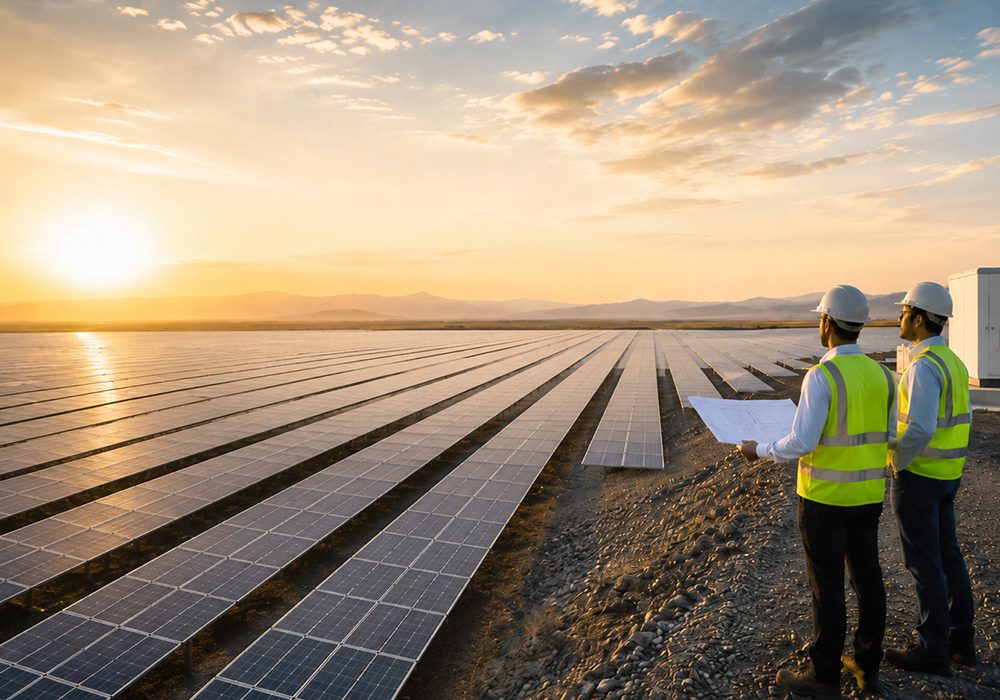
A Sustainable Investment Powered by Solar Energy
Solar power plants can be developed to serve a variety of objectives. In industrial facilities and commercial centers, they are commonly used to reduce dependence on grid electricity and manage energy costs. For investment projects, a solar power plant can be designed to generate and sell electricity. In off-grid areas, solar systems combined with energy storage can provide a reliable and independent power supply. Each of these applications requires a different engineering approach. Plant capacity, inverter type, PV array configuration, protection systems, and grid connection method must all be determined according to the specific objectives and conditions of the project. Before submitting a final proposal, Ager evaluates the technical and economic aspects of each project to determine the feasible capacity, estimated energy generation, and the most suitable system configuration.
ON-Grid, Off-Grid, or Hybrid Solar System
On-Grid System
In this type of power plant, the electricity generated is synchronized with the utility grid. The produced energy can either be consumed on-site or exported to the grid, depending on the project structure and applicable regulations. These systems are typically designed without battery storage and are well suited for projects focused on reducing electricity costs or generating power at a larger scale.
Off-Grid System
In areas without access to the utility grid, a solar power system combined with battery storage and energy management equipment can provide the electricity required by the facility. System capacity is determined based on daily energy consumption, hours without solar generation, local weather conditions, and the required level of energy storage.
Hybrid System
In a hybrid solar system, solar panels, the utility grid, energy storage, and, when required, a generator are managed as an integrated system. This solution is well suited for factories, healthcare facilities, hotels, critical buildings, and other sites that require a reliable and continuous power supply.
Feasibility Studies: The First Step Toward a Successful Project
Before construction begins, it is essential to determine whether the proposed site is technically and economically suitable for a solar power plant. The feasibility study evaluates key factors such as solar irradiation, temperature conditions, shading, land or rooftop characteristics, installable capacity, and grid connection potential. At the same time, the facility’s electricity consumption profile, economic objectives, and intended operating model are analyzed.
For On-grid solar power plants, obtaining preliminary approval from the relevant electricity authority and conducting a grid connection study are essential parts of this stage. These studies determine the grid’s available connection capacity, point of connection, voltage level, protection and metering requirements, power evacuation route, and other technical requirements for integrating the plant with the grid.
The outcome of this stage provides a clear understanding of the recommended plant capacity, estimated annual energy generation, indicative project cost, grid connection requirements, and the appropriate path for project development. A thorough feasibility study helps prevent incorrect capacity selection, unexpected costs, permitting issues, and technical constraints during the design and construction phases.
Technical Service Delivery Process
Why Ager?
Ager International Industry Group approaches solar projects as integrated energy systems rather than simply a collection of equipment. Effective plant design requires seamless coordination between PV modules, inverters, mounting structures, electrical protection systems, and monitoring solutions. Ager’s approach is built on detailed assessment, professional engineering design, appropriate equipment selection, and high-quality execution. From the initial site survey through installation, commissioning, and after-sales support, every stage is managed as an integrated process, providing clients with a clear, structured, and controllable path from project development to operation.

Frequently Asked Questions
The appropriate capacity depends on the available space, electricity consumption, grid connection capacity, project objectives, and budget. The optimal system size is determined following a technical assessment.
The required space depends on the power rating and dimensions of the PV modules, installation angle, row spacing, and project type. The exact area required is determined during the system layout design.
Yes. Solar power plants continue to generate electricity on cloudy days, although their output is lower compared with sunny conditions.
In many on-grid projects, batteries are not required. However, energy storage can be added when backup power or more advanced energy management is needed.
The project timeline depends on the plant capacity, site conditions, equipment requirements, infrastructure preparation, and grid connection process.
If future expansion is considered during the initial design stage, the solar power plant can be designed to accommodate additional capacity at a later stage.
Start Your Solar Project with the Right Design
A solar power plant becomes a successful long-term investment when its capacity, equipment, and implementation strategy are selected according to the actual conditions and objectives of the project. The experts at Ager International Industry Group are ready to assess your site and project requirements and develop the most suitable technical and economic solution for your solar power plant.
Contact Ager’s experts for consultation, feasibility assessment, and an initial project estimate.